Heritage
Murrurundi's heritage buildings and historic sites, one stop at a time.
Heritage Walk Sites
Open the walk map →Murrurundi's Heritage
Murrurundi, New South Wales, boasts a deeply layered heritage shaped by its Indigenous origins, its time as a volatile 19th-century frontier settlement, and its eventual boom as a major railway and mining hub. Located in the Upper Hunter Shire at the base of the Liverpool Range, the town's name derives from a local Indigenous term meaning "five fingers," which references a prominent rock formation visible at the northern end of the township. Indigenous & Early Frontier History Prior to European arrival in the 1820s, the area was home to the Wanarua and Kamilaroi peoples.
Following the discovery of a navigable route across the mountains, European pastoralists moved into the valley. Because it sat at the northernmost edge of colonial settlement, early Murrurundi was a rugged frontier outpost frequented by teamsters, stockmen, and transient figures. Lawlessness was common, making the establishment of a local Court of Petty Sessions and a police lock-up in the late 1830s critical for maintaining colonial order.
The Tale of Two Towns
Modern Murrurundi actually began as two distinct, rival settlements separated by the Pages River:
- Murrurundi: Established as a government township on the river's northern side in 1840.
- Haydonton: Established on the southern side in 1842 by wealthy local landholder Thomas Haydon.
- Notable among Haydonton’s earliest residents was Benjamin Hall Sr., who ran a local butcher shop. His son, Ben Hall, spent his childhood here until age 13 before going on to become one of Australia's most infamous bushrangers.
The two settlements operated independently for decades before officially amalgamating under the name Murrurundi in 1913.
Infrastructure & Industry Booms
- The Railway (1872): The arrival of the Main Northern Railway line transformed Murrurundi into a vital transport hub. It served as the northern terminus for years while engineers worked on the challenging Ardglen Tunnel through the mountains. A major locomotive depot operated here until 1965, supplying the heavy "bank" engines needed to push trains up the steep mountain grades.
- Shale Mining (1911–1915): The British Australian Oil Company drove a brief but intense economic boom by mining oil shale at nearby Mount Temi. An aerial ropeway transported the shale down the mountain to a dedicated railway link. This industry caused the town's population to peak in 1914 before operations collapsed during World War I.
 Expand
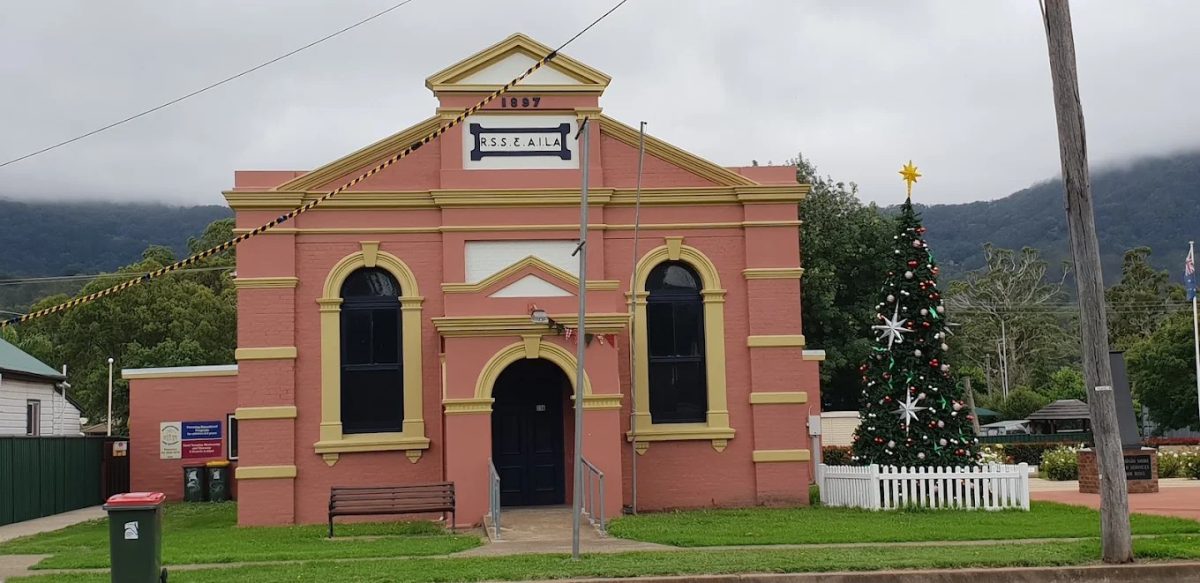
#1 RSL Memorial Hall
Mayne Street
The Murrurundi Memorial Hall (known as the RSL Hall) was originally built in 1897 as the Manchester Unity Oddfellows Hall before being converted into a district war memorial after World War II.
Key Historical Milestones
- 1897 Construction: Built as an Oddfellows Hall, featuring a high front facade, rendered painted walls, and traditional shaped pediments.
- 1946 Conversion: The Returned Sailors', Soldiers' and Airmen's Imperial League of Australia (R.S.S. & A.I.L.A.) nominated Sydney architect R. Minnett to value the building and plan its modernization into a soldiers' memorial hall. The district war memorial committee purchased the building for £1,500.
- 1947 Official Gazettal: Officially gazetted under the Theatres and Public Halls Act on 14 February 1947 as the Murrurundi Memorial Hall.
- Present Day: Managed locally as the Murrurundi RSL Hall via the Upper Hunter Shire Council, hosting community events and local exhibitions.
#2 Rosedale Cottage
Little Street
The original five roomed cottage was built probably between 1845 and 1850. This section of Rosedale Cottage is brick construction on a sandstone base course. Sandstone quoins have been used at the corners and reveals to openings. Heads, sills and the verandah is sandstone, the latter flagged on a sandstone base course.
The roof structure is timber â originally shingled and later covered with corrugated iron. The eaves have a fascia and boxed soffit of boards with a ventilation space. Internal walls are constructed of brick, which are plastered and papered. The floors are timber boards and ceilings include metal tiles and sheets, lath and plaster, fibrous plaster, and tongue and groove boarding.
1883â1935 major changes occurred. The family was large employed several servants and entertained a great deal. In 1932 the family donated the southern part of the property for a park, known as "Wilson Park" and land for the "Wilson Memorial Hospital".[1] Most of the extensions and renovations appear to have been carried out during this time.
The two major additions were of timber-framed construction on wooden stumps. The first extension (probably in the 1890s) is thought to be the bay window which enlarge the room, apparently used as a sitting room. The dining room was added, together with the middle verandah. The kitchen block was connected to the dining room by a covered way.
The second addition, the eastern wing, was thought to have been built c.â1901. The detached timber building just north of the new dining room was built beside the kitchen block and used as a dormitory by the five sons. It was known as the boy's room. Other buildings include meat house near the old dining room fireplace, an office east of the boys' room, a dairy room and a small room known as "the factory" which was used for making preserves.
Further to the north were a hayshed, a shed for two or three buggies, stables, a woolshed, milking bails, poultry shed and associated stockyards.
National Trust listed.
 Expand
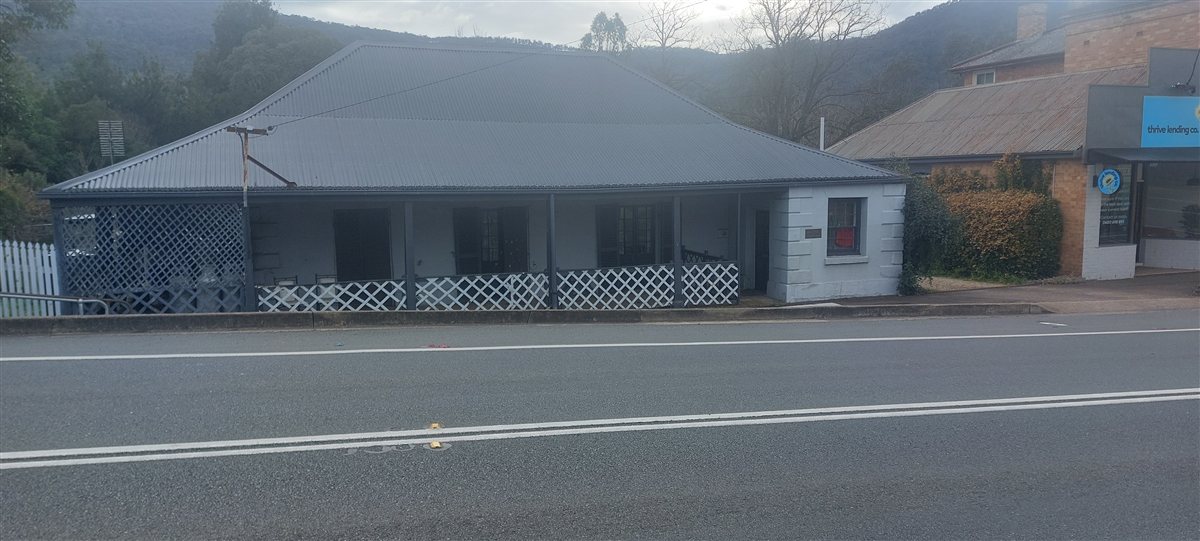
#3 Bridge House
Mayne Street
Mayne Street
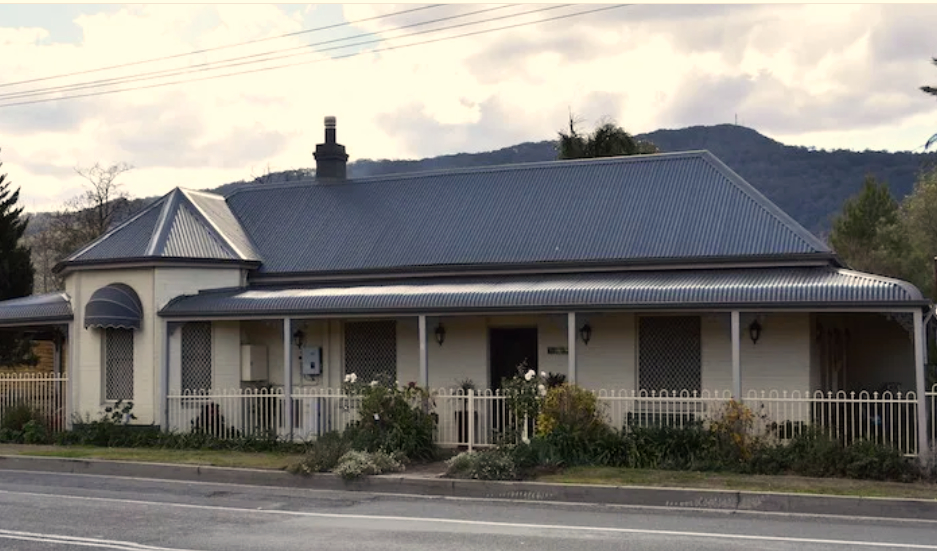
Bridge House is a National Trust-listed property on Mayne Street. The early settlement of Murrurundi saw many temporary buildings made from local resources - bark, wooden slabs and canvas buildings were a common sight for travellers.
In 1845, Mr Hutchinson purchased three quarters of an acre from Thomas Haydon for twenty pounds ($40). In 1854 he sold it to Caroline Wightman for thirty pounds ($60). Caroline, who also owned the White Hart Hotel, commissioned builder Robert Brown to build her a substantial home of brick and sandstone on the block, completed around 1856. After its construction it served for a time as a school with up to 30 pupils.
In 1860 a large flood covered her garden with river stone and washed away her 'outhouse' (toilet). Around 1864 the crossing over the Page River was upgraded with a trestle bridge, named 'Arnolds Bridge' after the officer-in-charge of roads in Murrurundi - the start of the house being known as Bridge House. Under instruction from the Commissioner of the time, Mrs Wightman "broke a bottle of champagne against the top rail of the bridge and christened it Arnolds Bridge" (SMH 18 Sep 1861). The current bridge was opened in 1970.
Caroline Wightman resided in Bridge House until her death in 1883, when the house passed to Margaret Haydon, who later married Dr Rufus Bell. It has since had a succession of doctors living in it - Dr Rufus Bell, Dr Bertram Middleton and Dr Ruth Godden - and was known then as the Doctors Residence. Today the original wooden shingle-style roofing can still be seen under the verandah, now covered by the iron roof.
 Expand
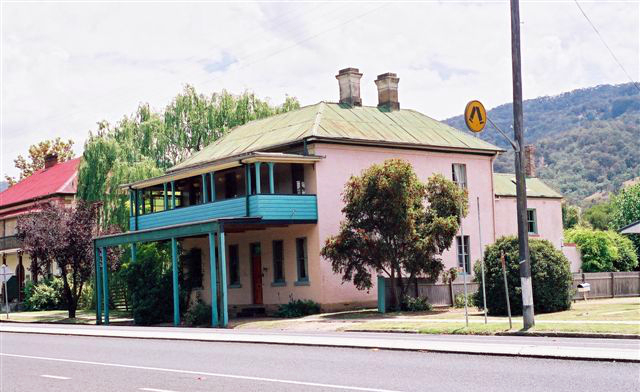
#4 Former CBC Bank
Mayne Street
140 Mayne Street
The former Commercial Banking Company (CBC) Bank building in Murrurundi is a historic two-storey Victorian Italianate landmark located at 140 Mayne Street
History and Architecture Original Construction:
Erected in 1865, the building originally served as the Joint Stock Bank before operating as the CBC Bank from 1870 until 1938.
Design Style:
Designed in the grand style associated with George Allen Mansfield, it features a ground-floor banking chamber with a first-floor manager's residence, rendered brickwork, and classic period details.
Interior Features:
The building retains many original features, including imported English pressed metal ceilings from the late 19th century and the original walk-in bank vault.
Modern Use
Following its decommissioning as a bank in the early 20th century, the property had various usesâincluding as a boarding house and retail shopsâbefore being converted into a private residence.
 Expand
#5 Dooleys Store
Mayne Street
Mayne Street
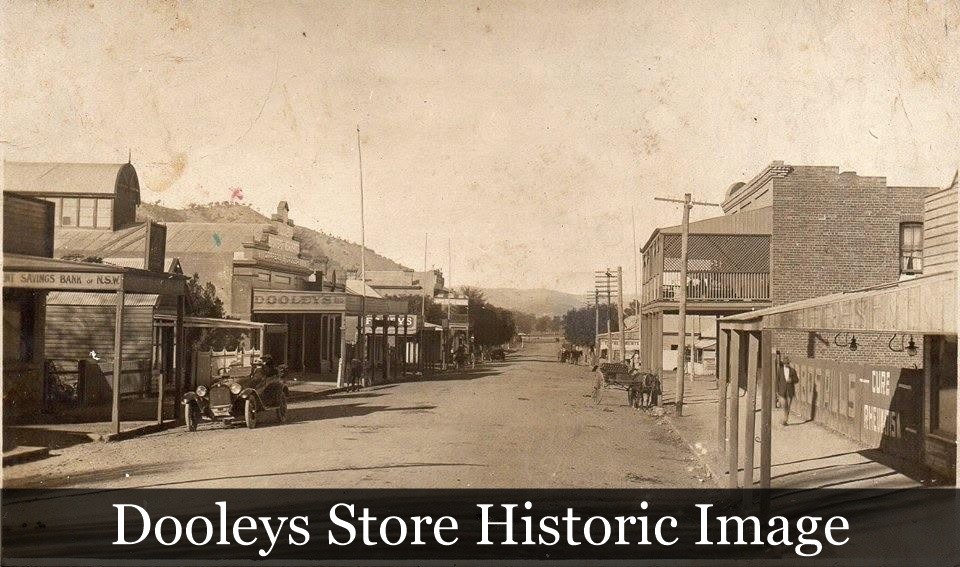
You are standing in what was the private town known as Haydonton. This town was surveyed in 1840 for Thomas Haydon. There were already established businesses taking advantage of the main road and the need for supplies by settlers heading north.
One business was a shoemaker's shop where Dooleys now stands. The land was originally purchased by Denis Reardon and Denis Shannahan in 1843. Denis Reardon, a shoemaker, built a residence and a shop. By 1860 there were three residences and the shoemaker's shop on site.
In 1872 Mr Thomas Steele Grehan established his general store on the site. He later sold the business to Mr James Farrell, an Irish immigrant. Joseph Dooley managed the store for Mr Farrell until his death in 1894.
Brothers Lewis and David Cohen purchased Mr Farrell's general store after his death, with Joseph Dooley remaining the manager. In 1905 the Cohens sold the store to Joseph Dooley, with Joseph building the current store. Joseph had married Mary Gallagher in 1889 and they had ten children, many of whom went on to work in the business. The Dooleys were very generous to Murrurundi, and Mary was on many local committees raising money to support the Wilson Memorial Hospital and the Catholic church.
When Joseph Dooley died in 1925 it was recorded that it was 'one of the biggest funerals ever seen in the area'.
One daughter, Mary Imelda, after losing her husband at a young age returned to manage the store. Her drive saw her open new stores in Willow Tree and Blandford. Mary also had a 'Flying Fox' payment system installed to streamline payments - a system of wires suspended from the ceiling that would send money and invoices to a centralised account office, then return the change and receipt to the point of sale. In 1905 there were 25 staff. In 1964 Jack, Joseph's youngest son, took over the running of the business.
The shop front underwent a major renovation around the 1930s, removing the arched windows for larger glass windows.
In 1979, the Dooley family sold the store, ending 75 years of continuous ownership.
 Expand
#6 White Hart Hotel
Mayne Street
Mayne Street
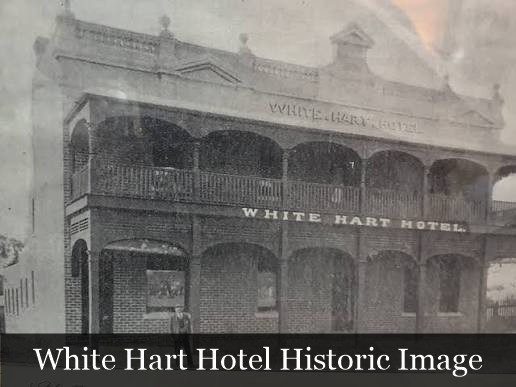
The White Hart Inn was established in 1842 by Alexander Wightman at Haydonton, as Murrurundi was then known, on a timber structure built by the in-laws of Thomas Haydon. Alexander was the son of Caroline and Adam Stuart Wightman; their other children were Margaret, Peter, William, Adam Stuart, John and Philip.
A publican's licence was granted to Alexander Wightman for the White Hart Inn between 1842 and 1847. From 1848 to 1853 the licence passed to his mother, Caroline Wightman. In October 1853 a public dinner was held at the Inn for Thomas Haydon Esq., J.P., on the occasion of his leaving the district, attended by many settlers, with the hostess of the White Hart commended for her food and wine.
From 1854 Caroline's son William Wightman held the licence until 1858, and it was around this time, in 1857, that the Inn was enlarged.
The Governor of NSW, the Earl of Belmore, dined here in 1869. The northern end was rebuilt at the outset of the twentieth century. By 1908 the hotel was being run by Mr M. T. Rooney, and the town around it had grown from a single pub and store into a settlement of around 1300 people.
The second storey was added in 1936.
 Expand
#7 Shire Council Chambers
Mayne Street
Mayne Street
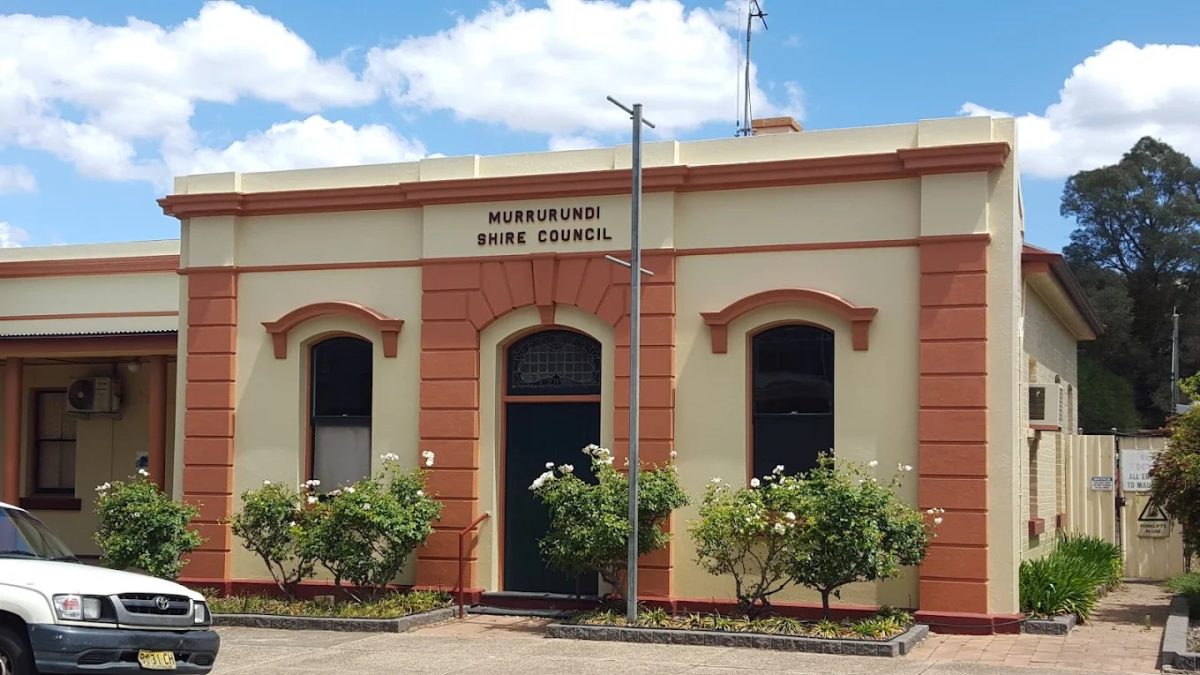
Built in 1906 as Warrah Shire Council Chambers, with renovations carried out between 1954 and 1968.
 Expand
#8 Haydonton Inn
Mayne Street
Haydonton Inn 2 Mayne Street
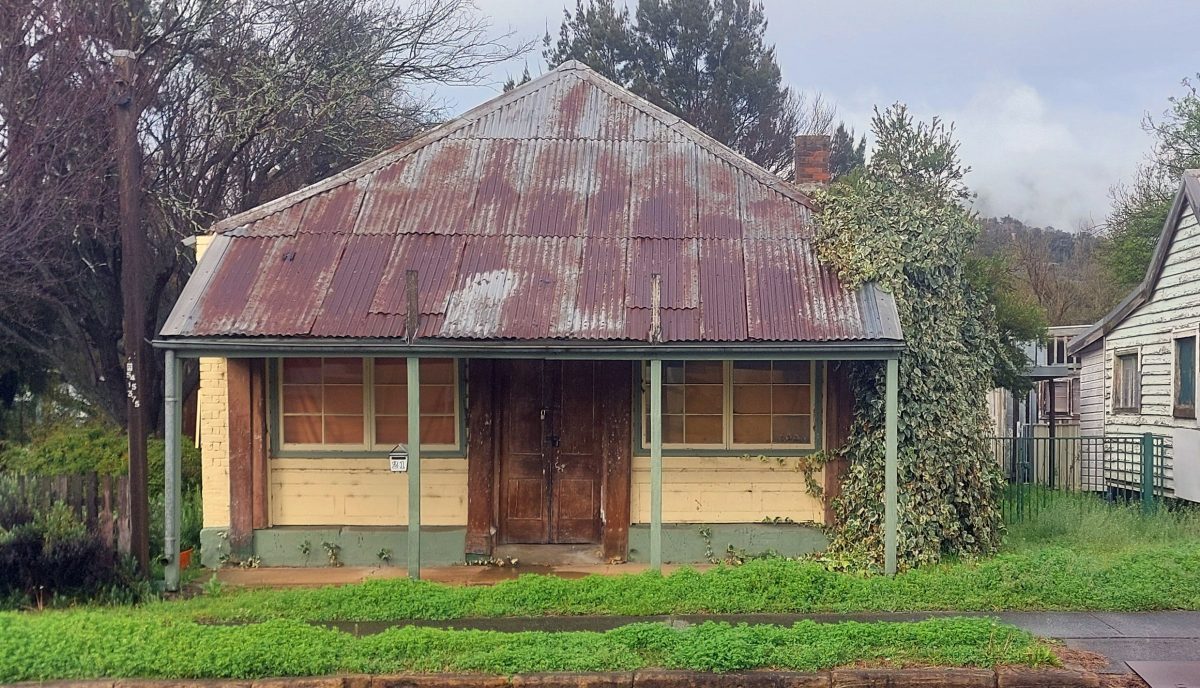
This is a landmark local heritage building located Built in 1852, it is constructed from local bricks and stands at the southern end of the town. While it historically served as a critical overnight accommodation stop on the old highway, it operates today as a privately-owned residential home.
Historic Overview
- The Founder: The building sits in what was originally the separate private township of Haydonton, established in 1842 by local landowner Thomas Haydon. He subdivided his property to allow everyday settlers to buy land, which eventually amalgamated with government-designed Murrurundi in 1913.
- National Trust Listing: Due to its exceptional local heritage value, the former inn is listed on the National Trust register. It still retains its iconic, original "Haydonton Inn" nameplate fixed to the front facade.
 Expand
#9 Skin and Wool Store
Mayne Street
Mayne Street
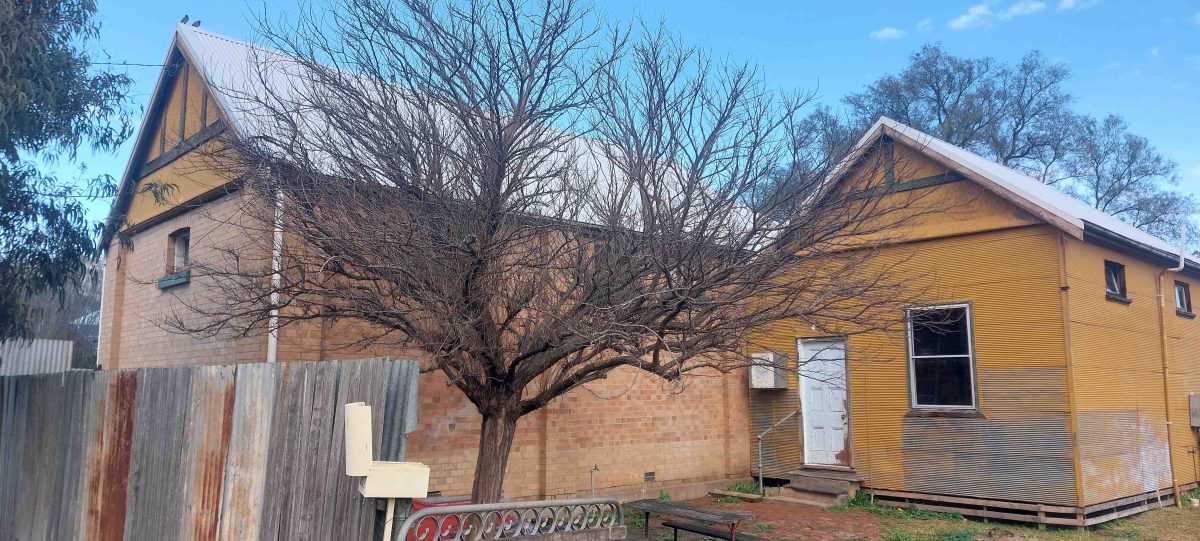
Currently used as a private workshop, this building was constructed from handmade thumbprint bricks around 1856. It was used as a skin and wool store for many years.
The historic structure is the former skin and wool store located on Mayne Street, Murrurundi.
Historical & Architectural Heritage
Built circa 1856, this landmark is a vital piece of the Upper Hunter's pastoral identity. It stands as a physical reminder of the era when Murrurundi acted as a crucial frontier service town and transport hub for the burgeoning Australian wool industry.
- Handmade Construction: The building is distinctively constructed from rare, early colonial handmade thumb-print bricks. These markings are unique to individual convicts or early colonial brickmakers who pressed their thumbs into the wet clay before firing.
- Location context: It is located on Mayne Street (historically known as part of the Haydonton settlement). It sits almost directly opposite Brook Street, positioning it strategically close to the Pages River for early transport and processing needs.
- Historical Significance: Long before the railway arrived in 1872, early pastoralists relied on regional depots like this to store, grade, and trade sheepskins and heavy wool bales harvested from surrounding stations.
 Expand
#10 Masonic Hall
Victoria Street
Victoria Street
Built in 1911 for £400 and became the Lodge of Hope in 1966.
The former Masonic Hall in Victoria Street is officially recognized as a local heritage item within the Murrurundi Conservation Area.
Heritage Overview
Location: Victoria Street, Murrurundi NSW.
Significance: Listed on the Upper Hunter Shire Council heritage schedules as part of the town's rare collection of 19th- and early 20th-century community and historical buildings.
Context: It sits within the broader Murrurundi Conservation Area, which highlights the town's distinct rural and historical architectural character. Local masonic history in the area dates back extensively, with regional groups like the Murrurundi Lodge active since the 19th century
This is now a private residence.
 Expand
#11 Railway Station
Victoria Street
Victoria Street
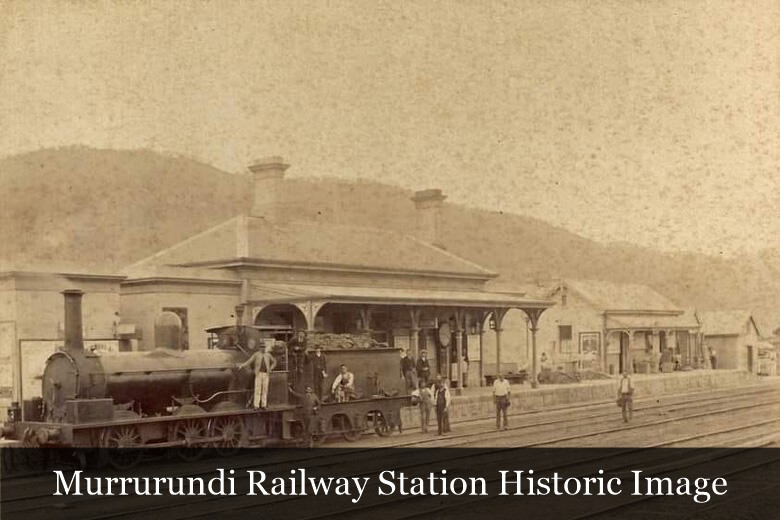
From 1855 onwards, construction of the Great Northern Railway inched from Newcastle up to the Hunter Valley. It then continued across the Liverpool Plains to the New England Region, right up to the Northern Tablelands.
By April 1871, the railway had arrived at Scone. For the next twelve months a group of 412 labourers aided by 158 horses carved the line between Parkville, Wingen, Murulla, Blandford and finally Murrurundi.
The Murrurundi Railway Station opened on the 4th of April 1872. The coming of the railway was transformative for the area, and the town grew in population from 400 to over 2000.
There was a building boom as new businesses were established and the demand for housing increased. By 1888 the line was completed to the Queensland border.
 Expand
#12 St Joseph's Church
Polding & O'Connell Streets
Polding & O'Connell Streets
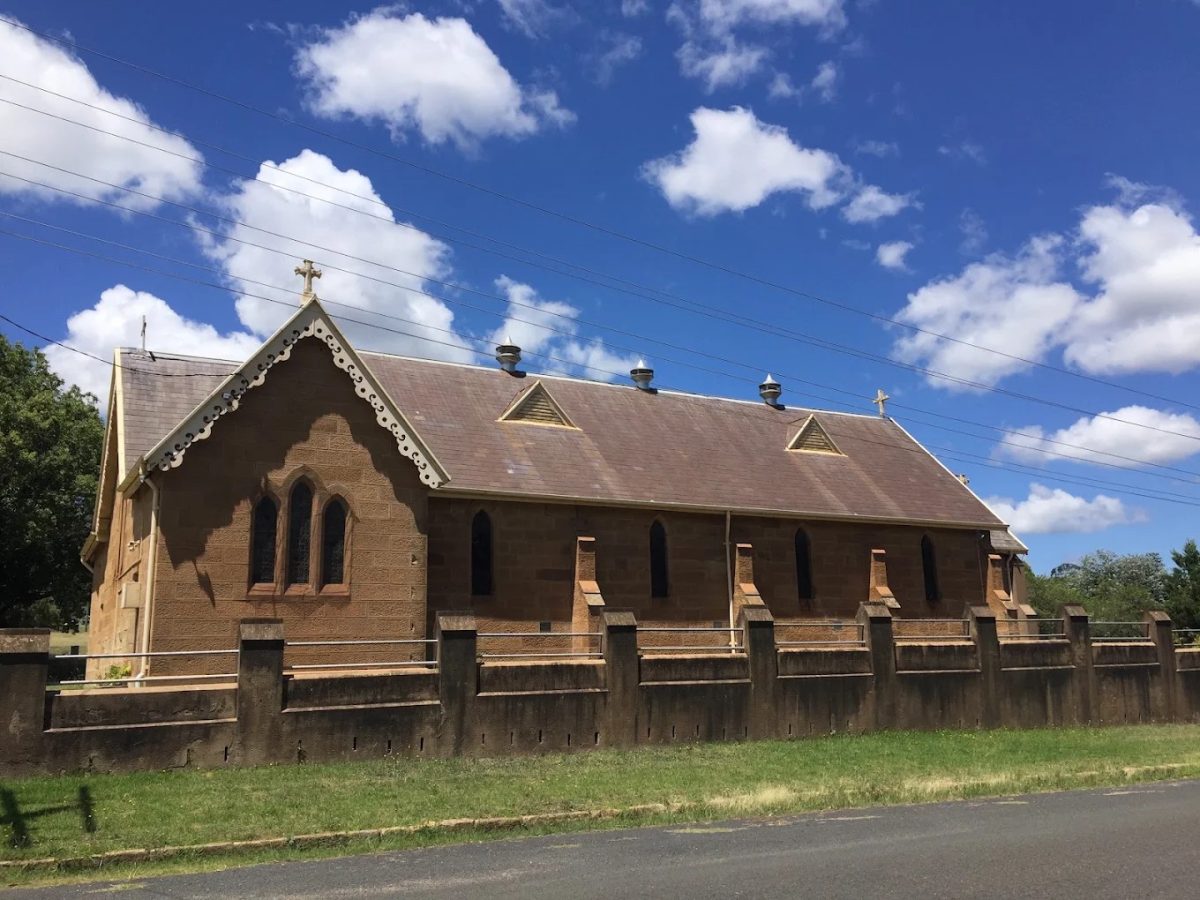
Thomas Haydon, a devout Catholic, donated this land to the church, and a small wooden chapel was built on the site in 1841. He oversaw the laying of foundations for a larger church in 1855.
The current building, made of local sandstone, was completed in 1860 and consecrated by Bishop Polding, after whom the street was later named. The Presbytery was added in 1901. The marble altar is made up of more than 1000 constituent pieces and is recorded by the National Trust.
Behind the church is the cemetery, containing the tombs of town founders Peter Haydon (died 1842) and Thomas Haydon (died 1855), and of Eliza Hall (died 1869), mother of bushranger Ben Hall, whom she outlived by four years.
 Expand
#13 Murrurundi House
Polding Street
Polding Street
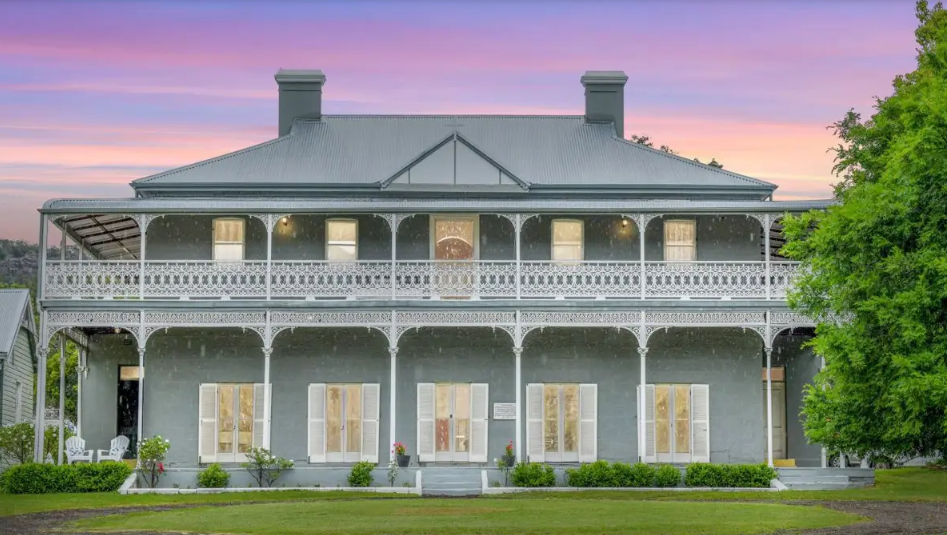
Built in 1880 as the convent for the Sisters of Mercy, the school and convent closed in 1970.
Murrurundi House, located in the Upper Hunter region of New South Wales, was originally established around 1880 as a convent for the Sisters of Mercy
. Listed on the National Trust Register, this grand two-storey heritage property represents a significant chapter in the region's religious and educational history.
Architecture and Design
- The Main Homestead: Constructed using sandstone sourced from a nearby local quarry, the main house features a prominent hipped roof, shuttered windows, a central gable topped by a crucifix, and a striking upper verandah wrapped in decorative cast-iron lacework. Inside, the building retains authentic features including a central wooden staircase, three original fireplaces, and a clawfoot bath.
- The Grounds: The estate spans an expansive 12,300 square metre level block nestled on the eastern side of the Great Dividing Range.
Historical Timeline & Evolution
- 1880: The primary building opens as the Convent of Mercy, serving the local Catholic community.
- 1890 & 1923: The estate expands with the construction of its first dedicated school building (1890) followed by an additional classroom block (1923) to function as a local Catholic school.
- 1970: Both the school and the convent officially close their doors. The Sisters of Mercy subsequently relocate from the area.
- Late 20th Century to Present: Following the departure of the convent, the buildings evolved through several adaptive reuses, operating variously as an art gallery, a yoga retreat, a music school, and a quilting workshop venue. Today, it stands as a lovingly maintained, privately owned country estate.
This building is now privately owned.
#14 Railway Hotel
Adelaide Street
Adelaide Street
Originally built of brick in 1880, the Railway Hotel was rebuilt in the 1920s after it was damaged by fire.
#15 Rosebank
Corner Adelaide & Liverpool Streets
Corner Adelaide & Liverpool Streets
Also on Hall's original block is 'Rosebank', built in 1889 as the Joint Stock Bank which folded in 1892. It stands at the corner of Adelaide St and Liverpool St. Nearby is Halls Creek which is named after the family.
#16 Hall Family Memorial Site
Adelaide Street
Adelaide Street
Ben Hall senior and his wife Eliza purchased the first town block from Thomas Haydon in 1842. The Memorial is built on a small part of the original block. Ben Hall the bushranger lived in Murrurundi with his parents.
 Expand
#17 Post Office
Mayne Street
Mayne Street
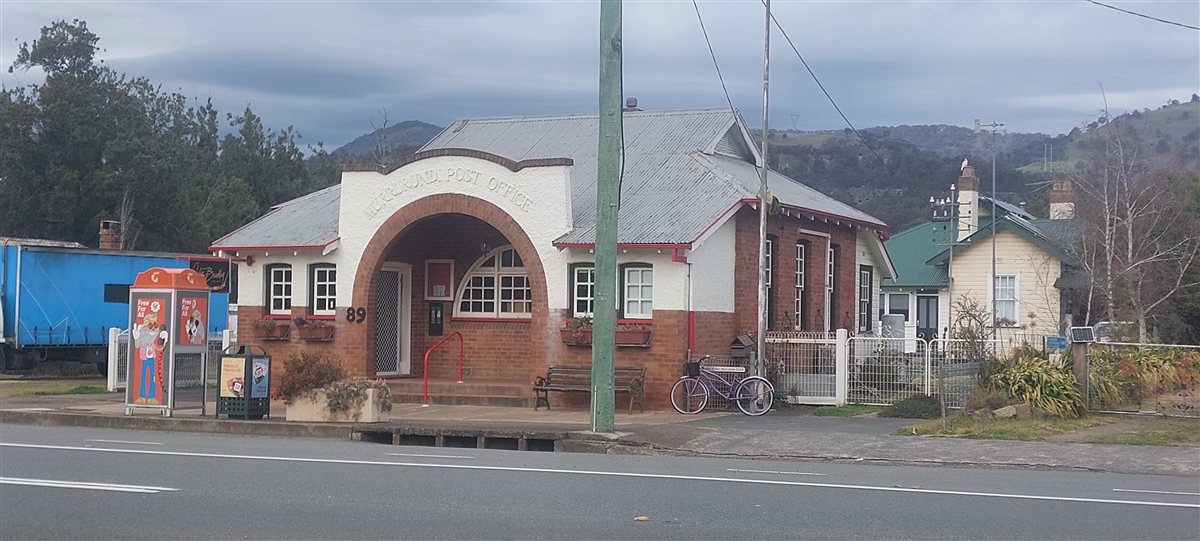
Post Office was built in 1913, now a private residence.
 Expand
#18 Pioneer Cottage
Mayne Street
127 Mayne Street
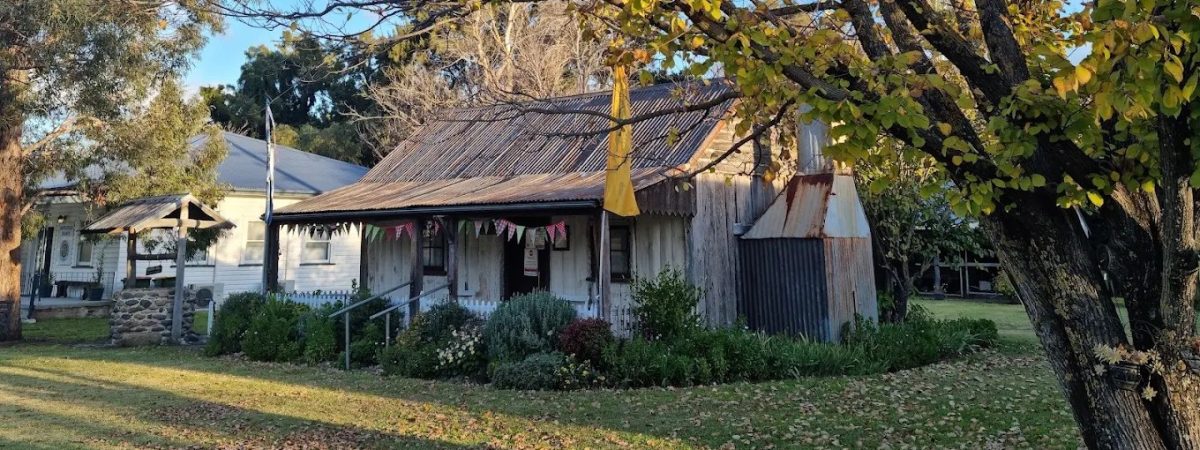
The Murrurundi Pioneer Cottage is a beautifully restored 1889 slab timber cottage located at 127 Mayne Street, Murrurundi NSW 2338
It serves as a major feature of the Murrurundi Museum complex managed by the Murrurundi & District Historical Society.
History & Relocation
- Origin: The cottage was originally built in 1889 by the Ivin family on a farm called Allston along Timor Way.
- The Move: It was donated by the descendants (the Musgrave family) and moved piece-by-piece to its current site on the New England Highway in the late 1990s.
- Construction: It is built using traditional rough-hewn hardwood split slabs (pit-sawn flat on one side and left round on the back) and features a whitewashed exterior and a corrugated iron roof.
What to See Inside
The cottage contains four distinct roomsâa kitchen, a dining/lounge area, and two bedroomsâoffering an authentic glimpse into 19th-century colonial farm life: [
- Period Details: The indoor walls are lined with old newspapers, and rooms feature wire-wove beds, early lanterns, chamber pots, and wax candlestick makers.
- Rural Artefacts: On display are traditional milk and butter churns, hanging meat safes, food coolers, and a treadle sewing machine.
- Outbuildings: Outside, the site features a vintage "dunny" (outhouse) and stables sheltering an original clothing mangle, a sulky, and a one-horse dray.
Visitor Information
- Opening Hours: The main museum complex is officially open Saturdays and Sundays from 10:00 AM to 12:00 PM.
The cottage was donated to the community by the Musgrave family and moved from Timor by the council, then re-erected by the community in 1996.
 Expand
#19 Literary Institute & Church Hall
Mayne Street
Mayne Street
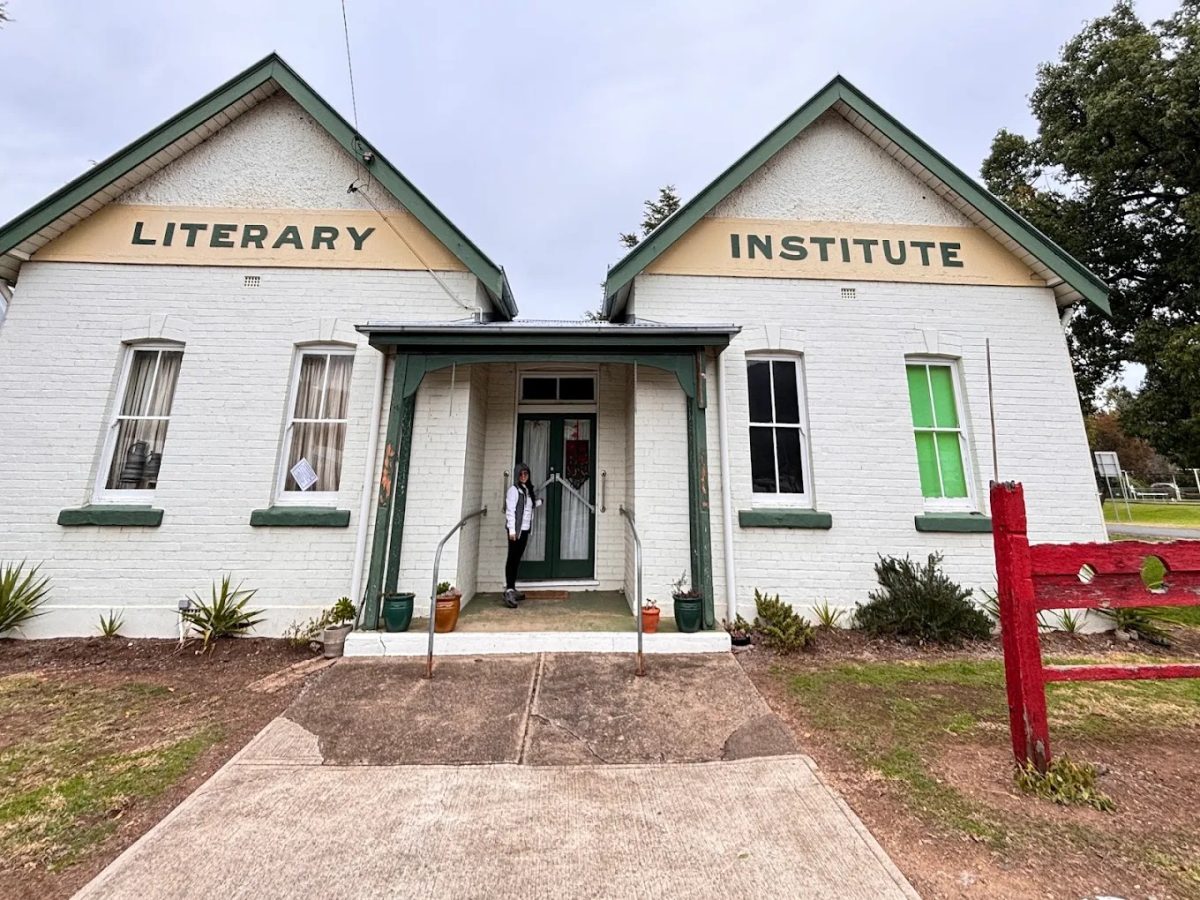
This is the site of the original Police Station in 1840, and School of Arts and Mechanics Institute in 1873. It is now the Museum and Church hall used for Museum exhibitions. It is also home to an Artillery Gun captured by Australian Forces in World War I and distributed to civic centres by the Federal Government, a Fordson tractor (1917-1920, which ran on benzene) and a Ruston Proctor engine (made between 1880-1920, generating seven horsepower).
#20 Horse and Dog Water Troughs
Mount Street
Mount Street
This double trough structure was built in memory of the drover and his dogs. The site is also the location of a well used prior to the provision of a town water supply.
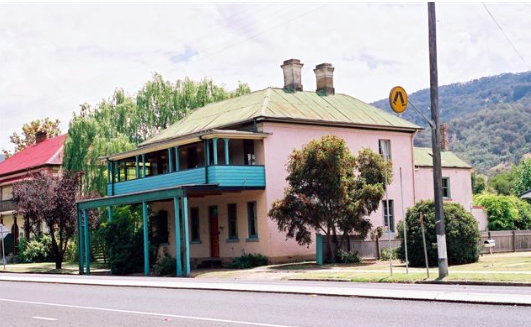
#21 Murrurundi Public School
Mayne Street
Mayne Street
The front right section was designed by Horbury Hunt and built in 1877. The trees in the school grounds are registered with the Botanic Gardens in Sydney.
 Expand
#22 CBC Bank Premises
Mayne Street
Mayne Street
Built in 1865 as the Joint Stock Bank, it was taken over by the CBC in 1870 and operated until 1938.
The former CBC Bank building on Mayne Street in Murrurundi is a heritage-listed late-Victorian building featuring a classic two-storey Italianate banking chamber and residence design.
Heritage & Architectural Details
Design and Style: Built in the grand Victorian Italianate style, attributed to the genre of architect George Allen Mansfield.
Materials: Constructed with rendered brick and a slate roof, retaining much of its original joinery and architectural integrity.
Civic Grouping: It forms a historically significant civic and commercial cluster alongside the adjacent Town Hall and former Rural Bank buildings, contributing heavily to the heritage streetscape of Mayne Stree
It is now a private residence.
 Expand
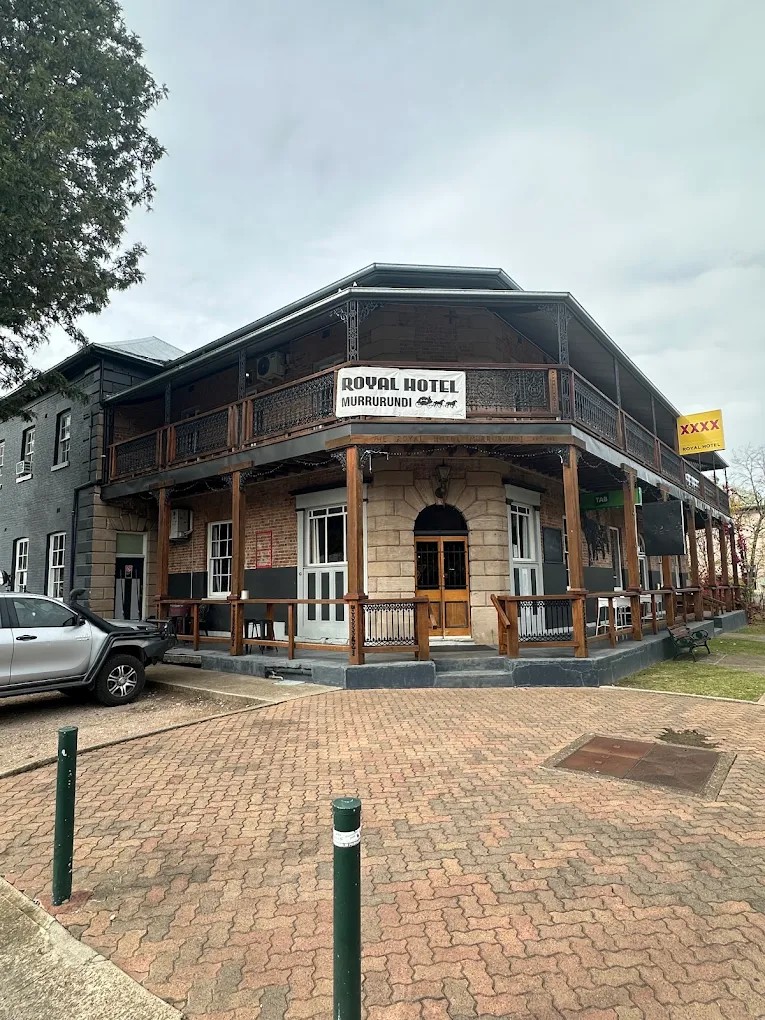
#23 Royal Hotel and Cobb & Co Stables
Mayne Street
Mayne Street
The stables were built in 1860 from local sandstone and shingles, now covered with iron. The Royal Hotel was built in 1863 and was used as a Cobb & Co changing depot until 1867.
#24 Telegraph Office
Mayne Street
Mayne Street
Built as the Telegraph Office in 1861, it amalgamated with the Post Office in 1870. It closed in 1913 when the new Post Office was built, now a private residence.
The historic Murrurundi Telegraph Office is a notable stop on the town's heritage walk, located along Mayne Street.
History and Details
Operation: The original telegraph office served the community before closing in 1913 when a new post office was established.
Heritage Value: The building is part of the historic streetscape of Murrurundi, which features various 19th-century colonial and Victorian-era public buildings reflecting its past as an important transport and communication hub in the Upper Hunter region.
Location: It is situated on Mayne St, close to other local landmarks like the Murrurundi Visitor Information Centre at 113 Mayne Street.
 Expand
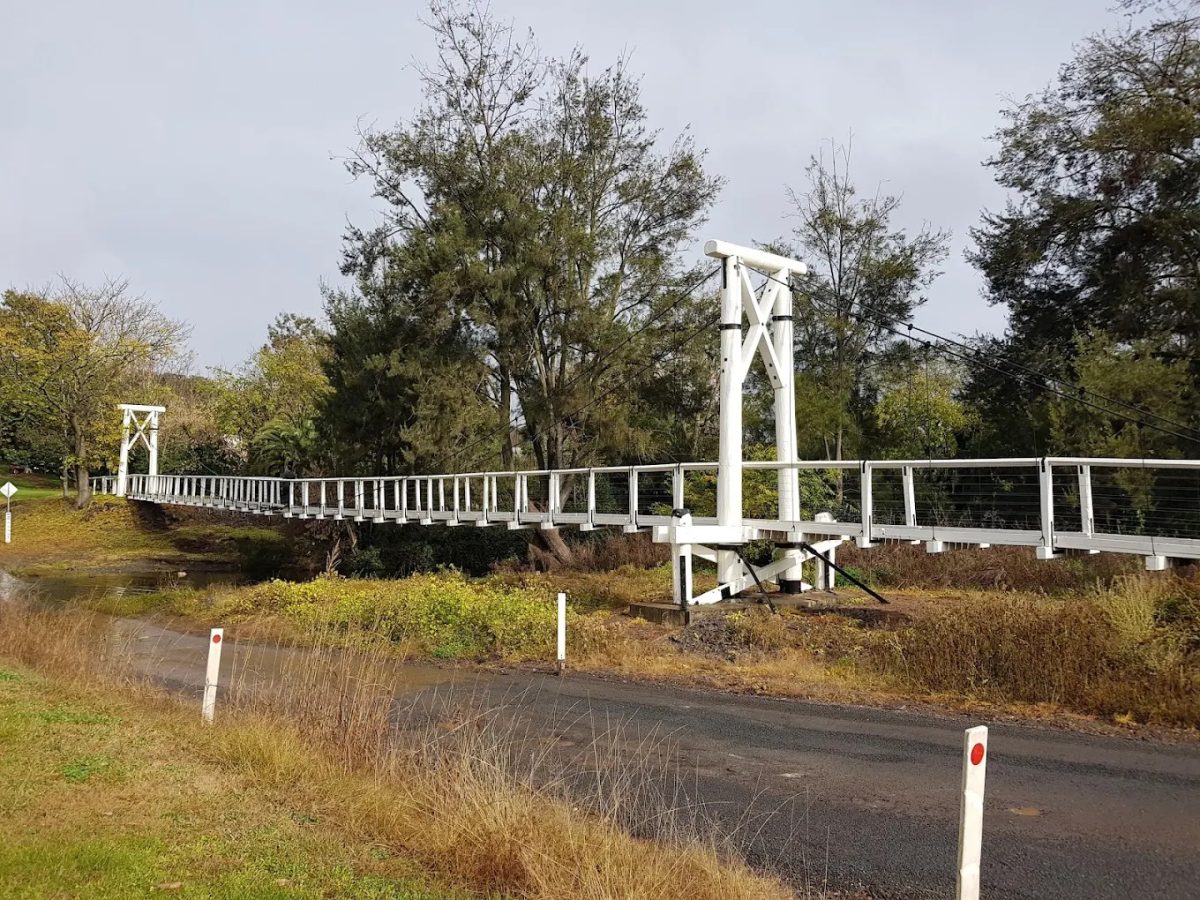
#25 Suspension Bridge
Murulla Street
Murulla Street
This original bridge over the Pages River was built before World War 1 and is the third bridge on the site. One of the former bridges was wide enough to transport the Chief Magistrate's buggy from the Royal Hotel to the Court House in times of flood.
 Expand
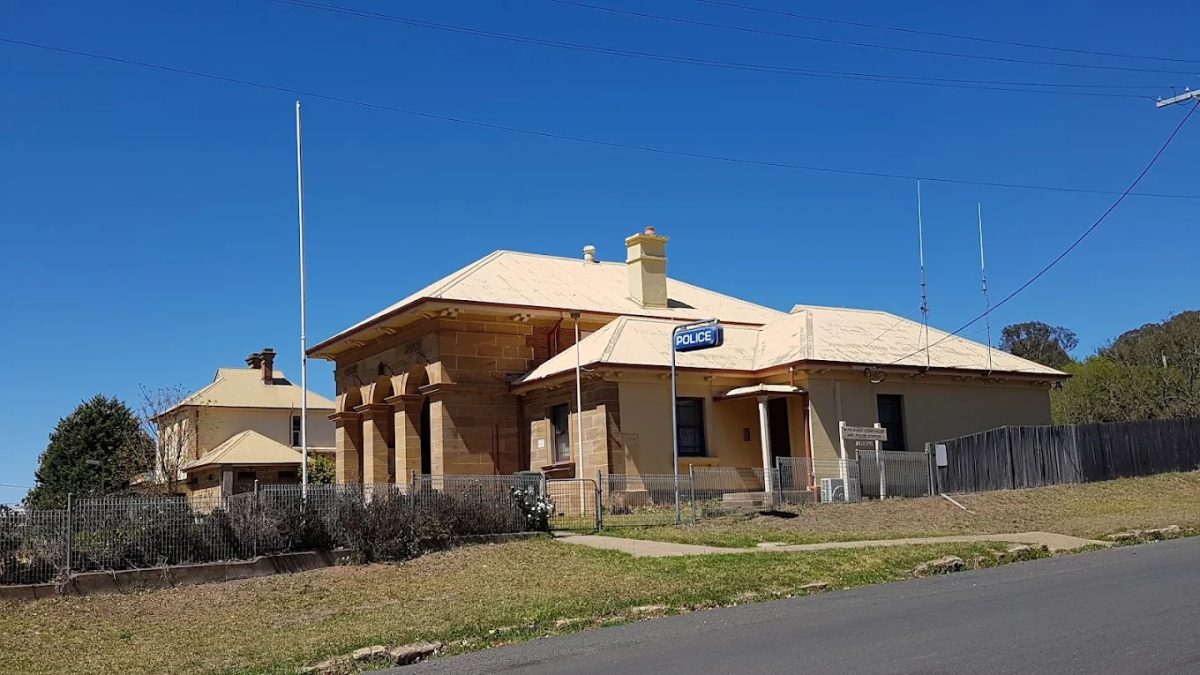
#26 Court House, Police Station and Gaol
Murulla Street
Murulla Street
The Murrurundi law and order complex on Murulla Street consists of three historic buildings, combining Gothic and Italianate design elements in local sandstone and brick.
Courthouse: Closest to the road is a symmetrical courthouse, its central block fronted by a triple-arched portico with two smaller wings that originally incorporated the police station.
Gaol and Residence: Next to the courthouse is the old gaol and lock-up keeper's residence, a two-storey brick block flanked by two single-storey sandstone wings; the ground-level verandah is a later addition. Both buildings were designed by Alexander Dawson and built in 1860-1861, on the site of the original 1842 courthouse.
Sergeant's Residence: Added at the southern end of the complex during the 1890s.
Early History
Original Site: A temporary court and watch-house were first called for in 1840, though the project stalled - the government's allotted funds proved too small to source the required seasoned timber, and for a time no contractor would take the job on. Without a lock-up, the Police Magistrate could not hold court sittings at all, and locals even offered the local Page Inn as a makeshift venue. In September 1840 the Legislative Council allocated £500 towards a proper courthouse and lock-up, and this original 1842 courthouse stood on the site until it was replaced by the current 1860-1861 complex.
Court of Petty Sessions: The Murrurundi Court of Petty Sessions was formally established in 1840, serving Muswellbrook, Merton and the Liverpool Plains district. It continued until 1984, when Courts of Petty Sessions across NSW were replaced by Local Courts.
Bushrangers: The building delays frustrated locals, particularly as bushrangers were said to be taking advantage of the lack of a proper lock-up. Ben Hall, later one of the colony's most notorious bushrangers, spent part of his early years in the Murrurundi district.
Function: The complex went on to serve as the main legal and policing hub for the upper Hunter region, managing local petty sessions, land board matters, and holding prisoners in the adjacent gaol.
 Expand
#27 St Paul's Anglican Church
Mount Street
Mount Street
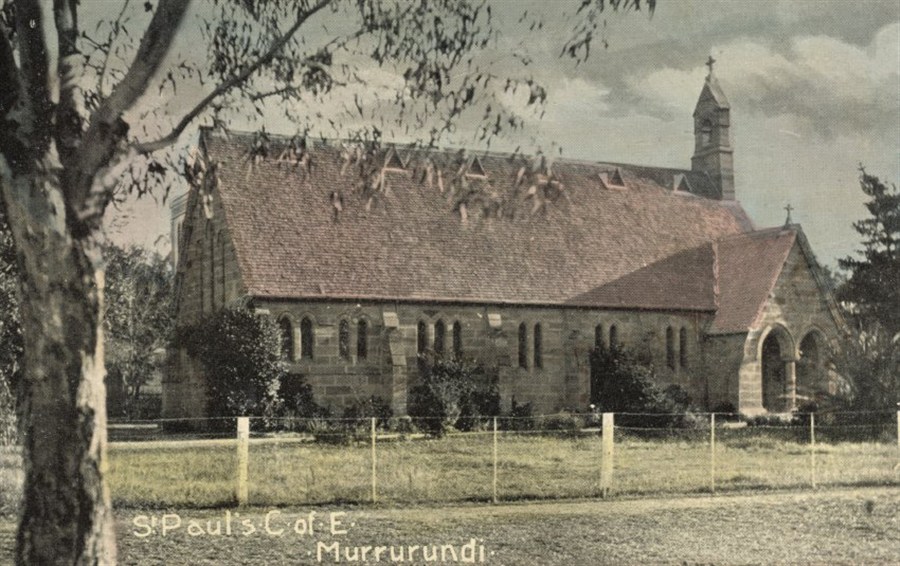
St Paul's Anglican Church celebrated its 150th anniversary in 2024. By the early 1840s the district had a reputation for lawlessness, with frequent cattle and horse theft and no resident clergyman for its scattered population. The Bishop of Australia, Right Rev. William Broughton, travelled up with the Rev. J. Morse to address this, arriving in Murrurundi on 16 July 1843. The first Church of England service in the district was held that day in the Murrurundi Court House, attended by about thirty people, and the Bishop chose the sites for a future church, school and parsonage. The first St Paul's Church was a modest wooden structure, built by A and WJ Mackay for £230.
Fundraising for a proper church gathered pace after the Bishop of Newcastle, Right Rev. William Tyrrell, visited in August 1849 and urged the congregation to build. By 1857, when the Rev. J.J. Nash was inducted as the parish's first resident incumbent, the church furniture had been improved with new cedar pews and candles for evening services.
In 1872 the parish council decided to build a new church to cater for the growing congregation. Prominent architect John Horbury Hunt was engaged to design a stone church to seat 200 people. The foundation stone was laid on 24 April 1873. Built of local sandstone with windows grouped in twos and threes between buttresses, the church was formally opened on 24 June 1874 and consecrated by the Bishop of Sydney on 12 October 1877. A square stone bell tower was erected in 1912 by the White family as a memorial to Frederick White of Harben Vale.
A severe hailstorm in 2015 damaged the roof, which was repaired using imported slate tiles, and the wooden floorboards and pews were refurbished at the same time.
 Expand
#28 Ethelstone
Haydon Street
Haydon Street
Alexander Brodie built this residence for his daughter and later sold it to Judges Mayniott and Temple.
Ethelstone is a historic local property and prominent residence in Murrurundi, New South Wales, deeply connected to the early pioneering families of the Upper Hunter region.
Historical Significance & Ownership
- The Haydon Family Connection: The home was built within a large paddock and became a focal point for the notable Haydon family. Following the marriage of her eldest daughter Caroline to Dr Rufus Bell, Mrs Thomas Haydon and her daughter Molly relocated to Ethelstone.
- They moved there from Bridge House (another significant heritage landmark in town) to free up the family property, Bloomfield, for Bernard Haydon and his new wife, Blanche Elizabeth Wakeford.
- Inheritance: Upon Caroline's passing in 1921, the property was left to her favourite nephew, continuing the home's multi-generational ties within the local settler network.
#29 Bobadil House
Mayne and Boyd Streets
Mayne and Boyd Streets
Built of local sandstone for H. Dangar in 1843, Bobadil was originally the White Swan before being known as the Wool Packer Inn. The stables were lost in a fire which destroyed the roof, burying a sulky and equipment. The stables have now been restored and are used as an Art Gallery.
#30 Shale Works and Manager Residence
Doughboy Street
Doughboy Street
There are relics of the original shale works and also the Manager's Residence, built in 1912. The building boasts unusually large attic windows for its time. It was used as the Joint Stock before it went broke in 1892. Now a private residence.